
 Image 1 of 3
 Image 2 of 3
 Image 3 of 3
MORTIS INVICTUS
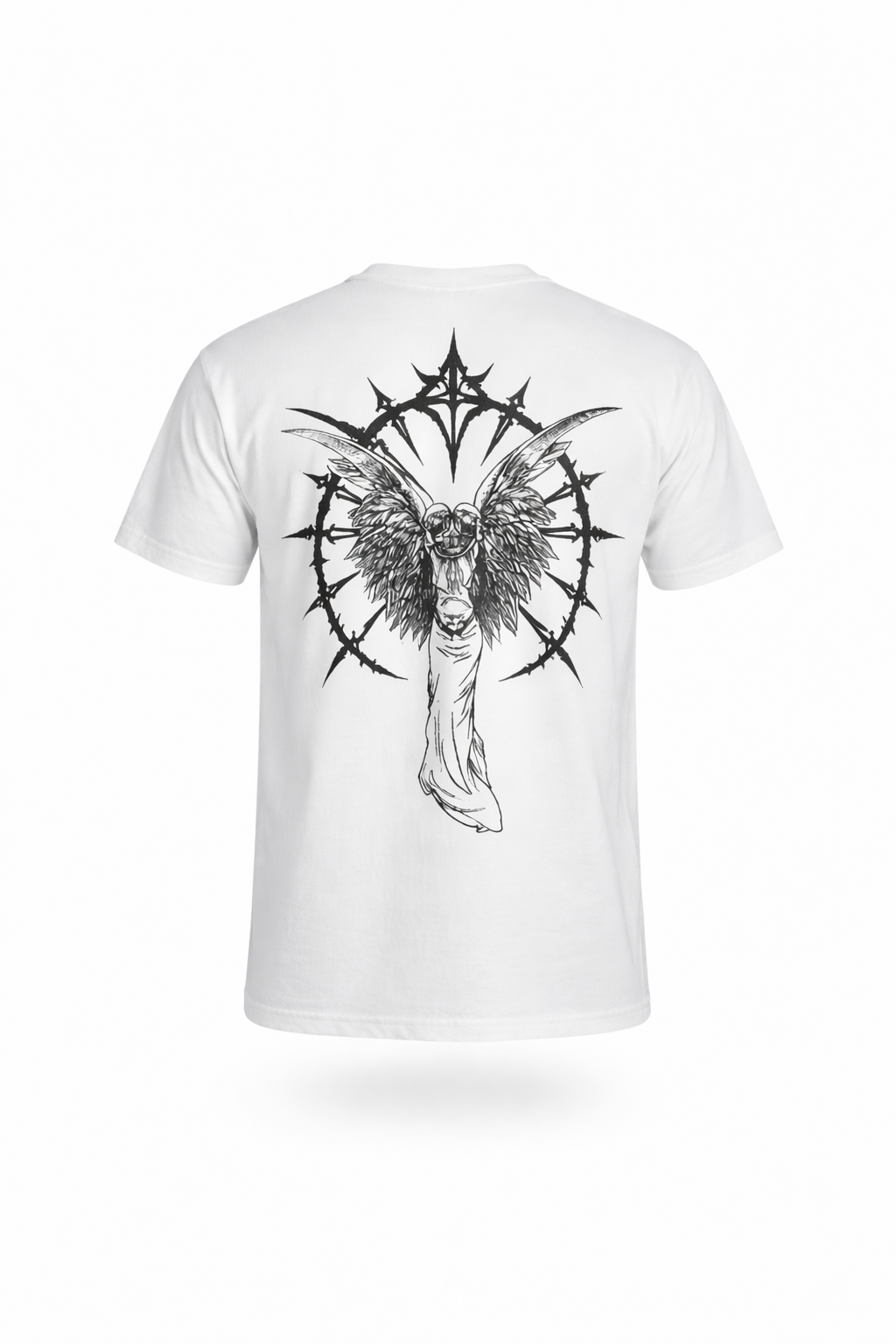
At the center of the image stand two figures, inseparably bound — like twins who were never granted the choice between life and death. Their bodies are wrapped in a long, flowing garment, yet their faces resemble masks suspended between angel and skeleton. No warmth rests in their features, only the quiet certainty of the end.
From their backs spread powerful feathered wings — once perhaps symbols of protection or ascension. Yet they seem heavy, almost crushing, as if burdened by the weight of all days already lost. Between their hands hangs a chain. It binds not only their bodies, but their fate. No escape, no separate fading — they die together, or not at all.
Behind them rises a circle of thorns and spears, like a twisted crown. It recalls a clock without a face, its hands forged from pain. Every thorn seems a lived moment, every sharpened tip a breath already spent. It is no halo, but a monument — a reminder that everything born is eventually pierced by time.
The image breathes transience. The siblings stand not within life, but at its threshold — neither fully fallen nor redeemed. They embody the truth that mortality is never a solitary sentence. We do not depart alone. We share our ending with those closest to us — in blood, in shadow, in memory.
And perhaps that is the darkest truth of all: not death itself is the heaviest burden, but the knowledge that even the closest bond cannot hold it back.