
 Image 1 of 3
 Image 2 of 3
 Image 3 of 3
EMPRESS
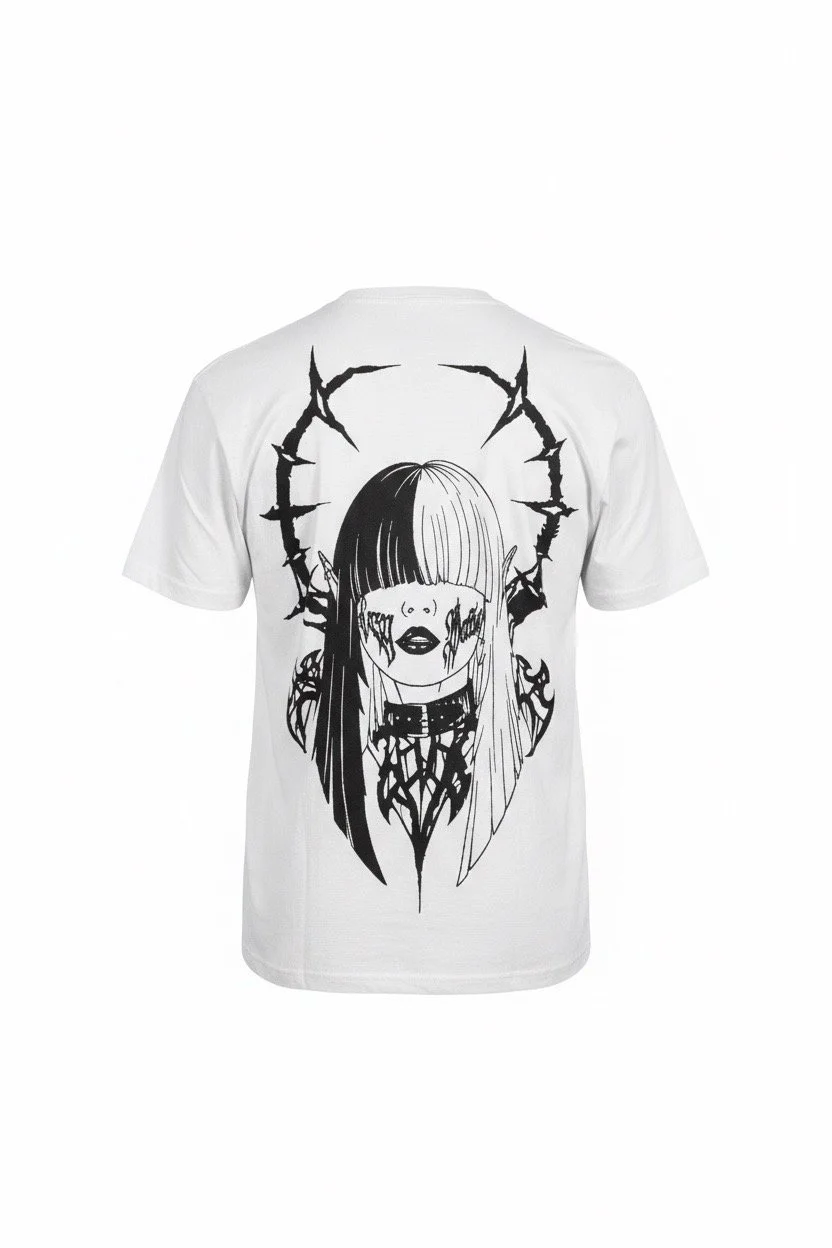
The image presents a stark black-and-white illustration steeped in gothic darkness. At its center stands EMPRESS — a figure embodying division, power, and inner conflict.
Her hair is split with surgical precision down the middle: one side consumed by deep black, the other drained into cold white. This sharp contrast is not merely aesthetic — it is the core of EMPRESS. Light and shadow coexist, not in harmony, but in tension. The straight-cut bangs fall like a veil, concealing her eyes and denying the viewer any certainty of her intent. She is unreadable, suspended between two extremes.
Her lips are painted in a dark tone, stark against pale skin. Jagged, distorted lettering stretches across both cheeks like ritual markings, as if EMPRESS has been branded by opposing forces. The inscriptions feel aggressive, almost violent — neither fully controlled nor entirely chaotic.
A circular crown of thorns rises behind her head, forming a brutal halo. It suggests suffering and sovereignty at once — pain as power. Surrounding her are symmetrical, blade-like tribal forms, sharp and unforgiving, reinforcing the sense that this figure is both guarded and dangerous.
Below her neck, a black ornamental emblem spreads like armor or a sigil etched into flesh. It appears less like decoration and more like a symbol of allegiance — to darkness, to balance, to duality itself.